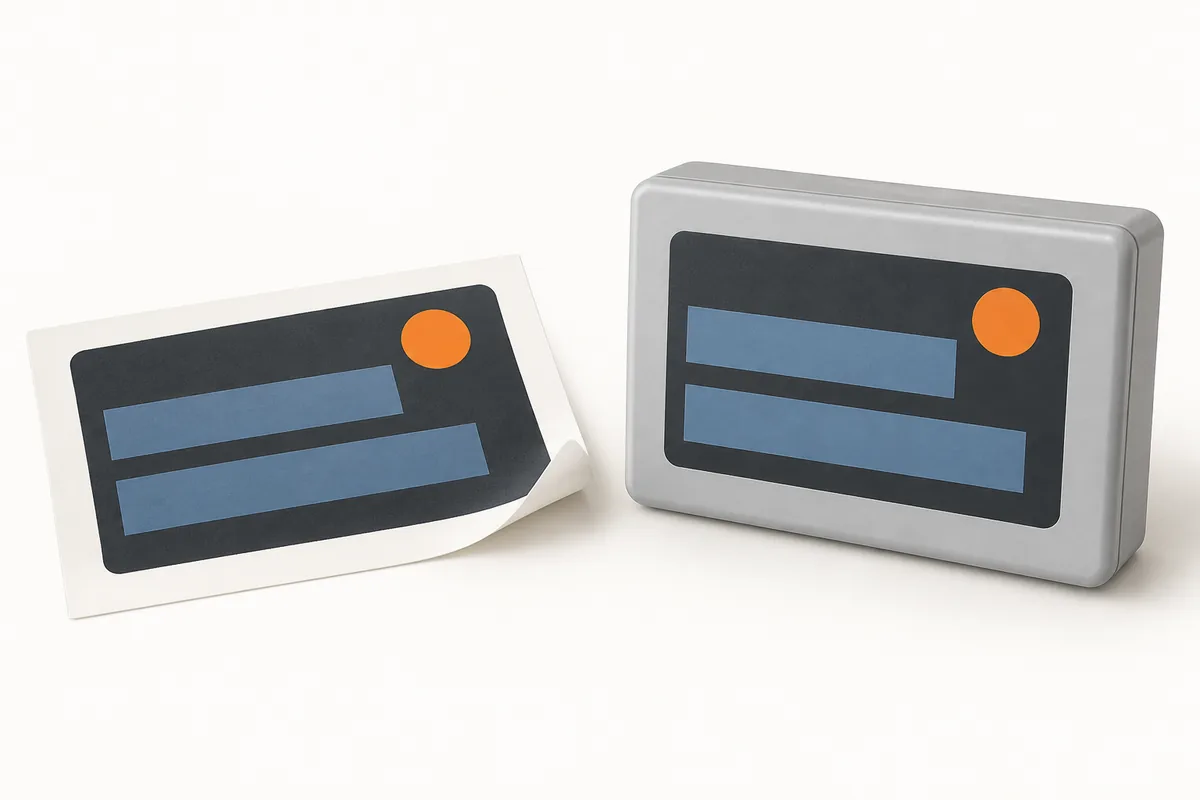
Illustration of artwork placement. Not an approved proof, actual Premier sample or selection of a decoration method.
A logo, an identification mark and a decorative finish need different evidence. Start with what the surface must do, which part and artwork revisions govern, and who can accept the result. Confirm which routes are available for the actual part before requesting samples.
Download the blank worksheet (CSV).
Compare routes against the same requirement
Pad printing moves ink from an etched plate to the part using a silicone pad. That mechanism does not establish adhesion or durability on your material. See Inkcups’ explanation.
- Pad printing.
Question to resolve: Can the proposed ink, artwork and print location meet the defined requirement?
Evidence to request: Identified part/ink construction and reviewed sample. - Decal.
Question to resolve: Which decal construction, placement and application conditions are proposed?
Evidence to request: Controlled decal specification and sample reference. - Metallized finish.
Question to resolve: Which areas need the finish, which must remain clear, and what appearance is required?
Evidence to request: Marked surface drawing and agreed finish reference.
These are review questions, not a ranking of cost, life or suitability. A route stays a candidate until its evidence addresses the same part, surface and exposure requirements.
Keep a decision record for each candidate
- Part and surface: part ID, revision, material/finish and marked decoration zone.
- Artwork: file ID, revision, permitted use and the person who approves changes.
- Use: required legibility or appearance, handling, cleaning and other relevant exposure.
- Evidence: proposed construction, sample identity, assessment method and acceptance reference.
- Decision: reviewer, unresolved question and next action. Start every candidate as Open.
Use samples with a stated purpose
Record whether a sample defines artwork, colour, placement, appearance or another requirement. A colour reference does not automatically approve the complete decorated part. Keep trial findings linked to the construction reviewed; record any later change for review.
For a manufacturing discussion, bring the controlled part and artwork, the supply scope and the decision needed next. Use the component RFQ checklist for the wider enquiry and review assembly and secondary operations. Ask the team how to share confidential files.