
Pad printing on plastic parts
Pad printing transfers ink from an etched plate through a silicone pad onto a part. For a plastic-part enquiry, send the drawing and artwork together.
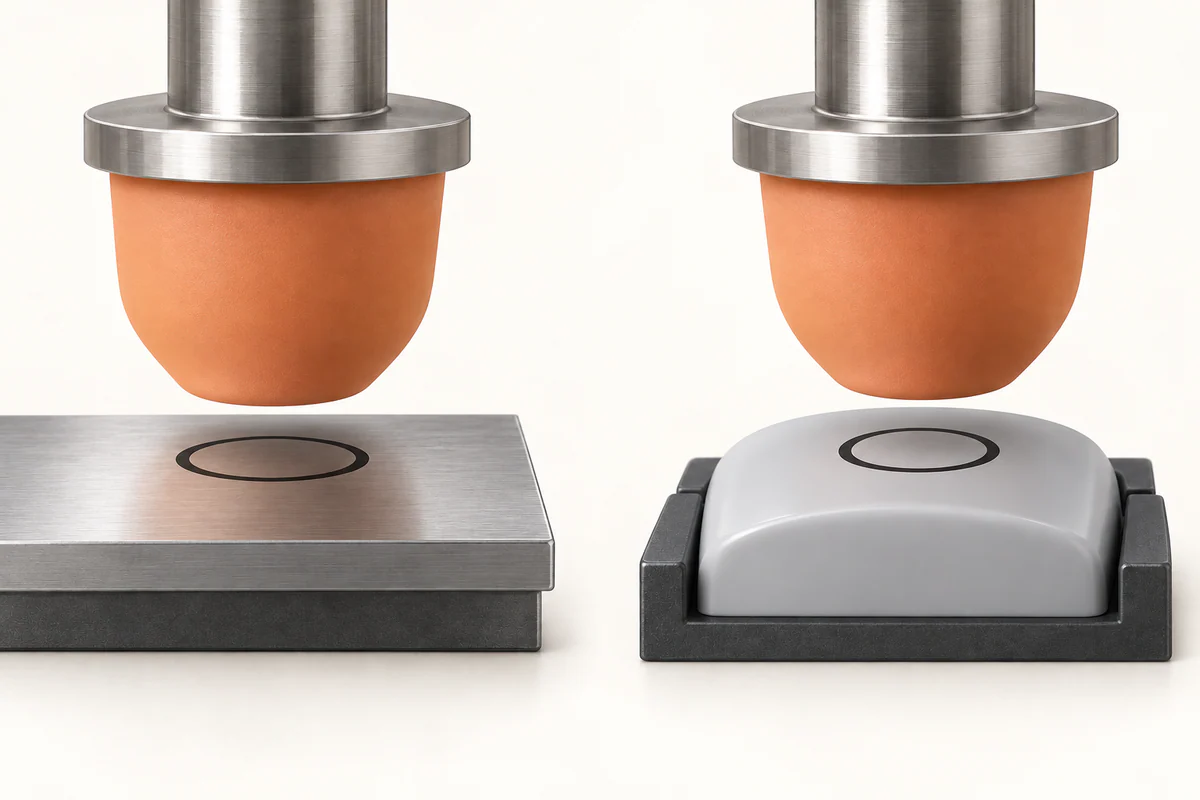
Illustration. Left: pad and inked plate. Right: pad and marked part. Concept only; not Premier equipment or a production sample.
Define the supply scope
State whether the enquiry concerns printing on an existing part, a moulded-and-printed component or a wider assembly programme. Confirm which operations are included before treating a quotation as complete.
Send the part and artwork
- The controlled part drawing or model, its revision and the material if known.
- The authorised artwork and revision, colours, printed region and required position.
- The marking’s purpose: decoration, identification, instructions or another defined requirement.
- Relevant handling, cleaning and service conditions, with the applicable specification.
- Expected demand, tooling status and programme timing.
Check the printed result
Identify the approved artwork or reference sample and the viewing conditions. State the appearance, placement and legibility requirements that matter for the part.
Where a specification requires resistance testing, provide the method, conditions and acceptance criteria. A visual sample does not replace a defined performance requirement.
Keep samples and revisions aligned
Label the part, artwork and sample revisions. Identify who approves a change and what must be reviewed before production. State any packaging or handling requirements for the printed area.
Discuss the requirement
Start with the application, drawing status, artwork status and required supply scope. Ask the team how to share confidential drawings or customer artwork through the agreed channel.