Plastic metallizing for component programmes
Premier includes metallizing within its integrated component programmes. Define the finish together with the plastic part, its visible areas and the conditions it must meet.
Metallizing adds a metal layer to a surface. For a component enquiry, identify the required result and any specified coating system before choosing the production route.
Show where the finish belongs
Mark coated, uncoated and appearance-critical regions on the drawing. State any restrictions around mating faces, holes, edges or features that must remain clear. Include an authorised finish reference or sample where one exists.
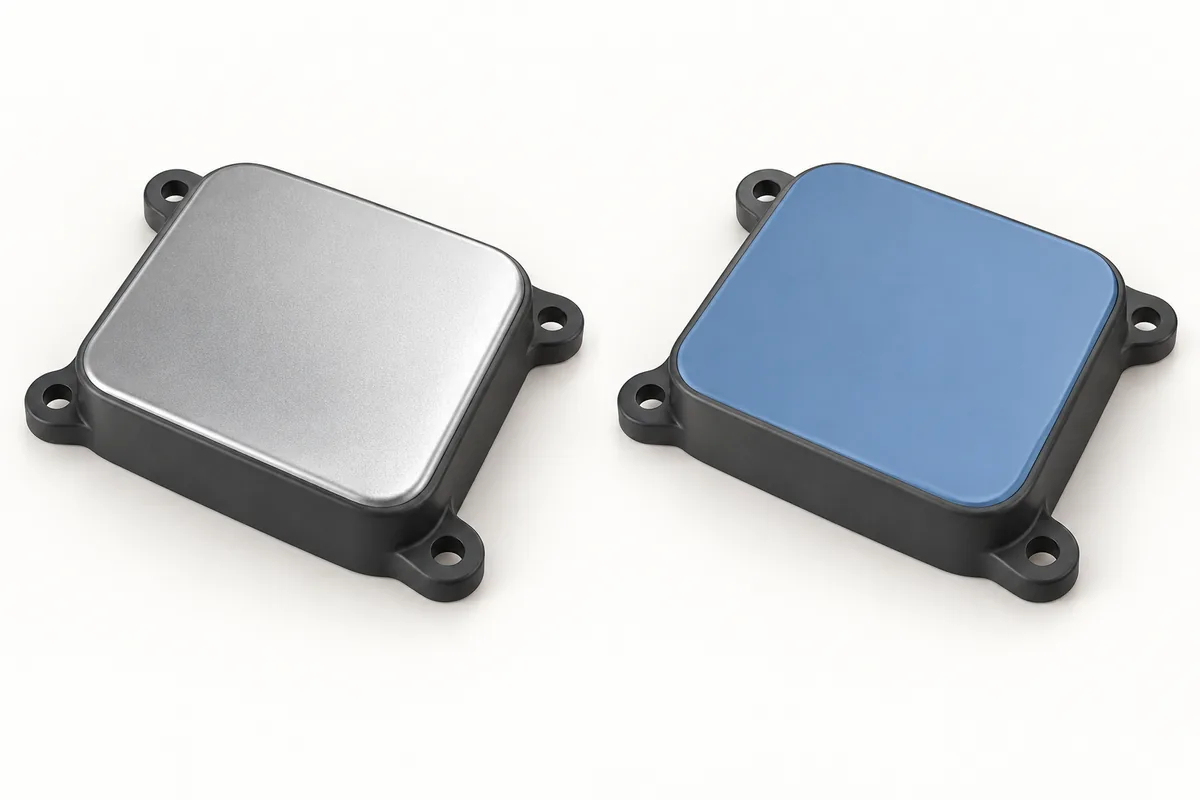
Illustration of a proposed finish region. Blue identifies a proposed finish area; this is not a Premier part, production coating or performance result.
Define the acceptance requirements
Specify the appearance, viewing conditions and permitted variation. If the component has a functional coating requirement, include the applicable specification. For any required test, provide its method, conditions and acceptance criteria.
Prepare the component enquiry
- The controlled drawing or model, part revision and substrate material if known.
- The surface condition and any earlier painting, texturing or other finishing operation.
- The finish reference, required coated regions and any masking requirements.
- Expected quantities, programme timing and the operations needed after finishing.
Use the plastic-component RFQ checklist to put the finish alongside tooling, assembly and inspection requirements.
Agree what the quotation includes
Identify who supplies the base part and which preparation, finishing, inspection, packing and assembly steps belong in the quotation. Confirm the accepted scope for the actual component; a finish name alone does not define a complete supply requirement.
For a wider programme, see assembly and secondary operations. Start an enquiry with the application, drawing status and required finish.