
We are Premier Plasmotec Private Limited, an Indian manufacturer connecting engineering, tool making, plastics processing, secondary operations and inspection. This checklist explains the information our teams need to assess a component. You can use it for a new design, an existing part or a tooling transfer, and mark unresolved items as open decisions.
Identify the part and the decision you need
Start with the part number, revision, application and contact responsible for technical questions. Say whether you need a budget estimate, a feasibility review, a tooling quotation or a serial-supply offer. These requests require different levels of design maturity and evidence.
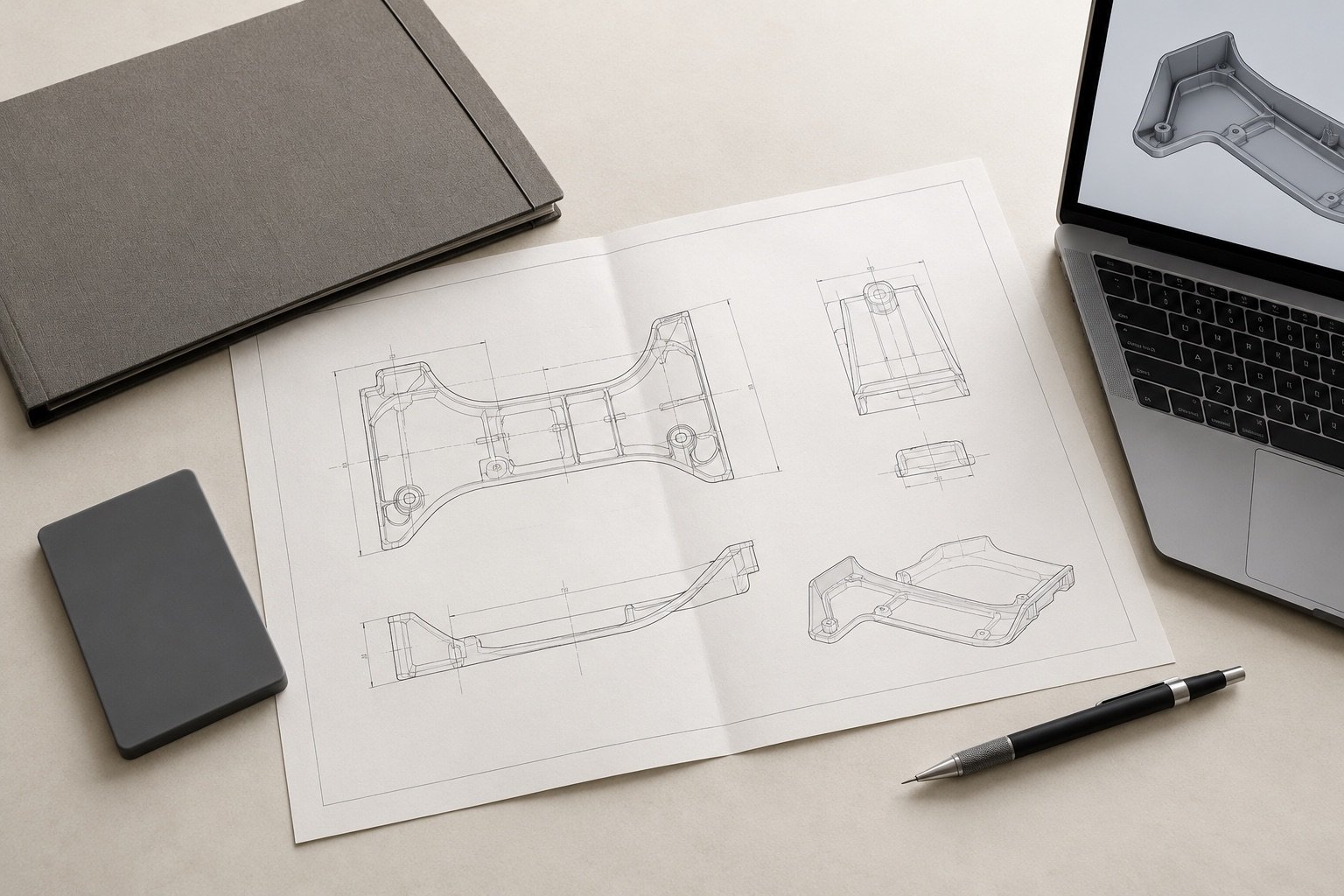
Include the controlled 2D drawing and 3D model where available. If they disagree, identify which document governs and resolve the discrepancy before tool release. A physical sample can help explain the part, but record what it defines: shape, fit, appearance or another characteristic. Do not leave the sample’s authority unstated.
Describe material and the working environment
Provide the complete material grade and approved alternatives, reinforcement, colour and any relevant restrictions. Explain the part’s function and the environment that affects it, including temperature, fluid contact, outdoor exposure or cleaning where applicable. Separate an established specification from a material suggestion that still needs engineering review.
Identify what happens if the component fails. A cosmetic issue, a sealing failure and a loss of a load-bearing feature create different priorities. This helps the engineering team understand why particular dimensions, surfaces or tests matter.
Define quantity, tooling and supply responsibility
State annual demand, peak demand, expected programme duration and the intended start of production. Explain any ramp-up or service-part needs. If the volume is a forecast rather than a commitment, label it accordingly so the commercial assumptions remain visible.
For a new mould, specify ownership, expected life or maintenance expectations where defined, cavity assumptions and the production-machine interface if already fixed. For transferred tooling, provide its condition, revision, trial or production history, maintenance record and known issues. State who pays for and approves corrections.
Clarify the supply boundary: a moulded part, a finished part, a subassembly, a complete assembly or tooling only. List inserts, fasteners, filters or other bought-out items and identify who supplies each one.
Turn quality expectations into acceptance criteria
Mark critical characteristics on the drawing and identify the measurement method or customer standard. Define the datum system, appearance zones, limit samples and functional requirements. If a requirement is still being developed, say which party will approve the final criterion.
List initial validation, sample submission and routine production-control expectations separately. Include required documentation and traceability. Avoid asking for every possible test without explaining the application; the relevant evidence should follow the risks and the customer’s release process.
Include the operations after moulding
Show welded, coated, printed, fastened and assembled regions clearly. State any masking, surface preparation or cleanliness requirements. Provide mating-part data and inspection access where the final assembly cannot be evaluated from the component drawing alone.
For optical surfaces, define viewing regions and appearance conditions. For hollow or sealed assemblies, include the agreed test procedure and limits where relevant. A request for a leak-free part is incomplete without a defined method and acceptance criterion.
Make delivery and change control practical
Describe packaging, protection of visible surfaces, identification, delivery destination and required logistics arrangements. State how drawings and specifications will be revised, who approves changes and how sample status is identified. Include the milestones at which you need decisions, not just the final launch date.
Before sending confidential drawings, ask the team for the agreed sharing channel and confidentiality process. Our website enquiry is a starting point for routing the discussion. A complete RFQ reduces avoidable clarification, but it does not replace a technical review or constitute acceptance of a production order.
Continue the engineering review
Injection moulding requirements
Windscreen-specific RFQ inputs
Coating-specific quotation inputs
Discuss the part with our team
Start with the application, drawing status, material, demand and programme timing. Ask how to share confidential files.