

Vacuum forming for plastic components
Vacuum forming shapes a heated plastic sheet over a mould using vacuum. Trimming may be needed to turn the formed sheet into the finished part. Premier includes vacuum forming within its integrated component programmes.
Describe the finished component
Provide the part drawing or model and identify its revision. Show the required finished edges, openings, mating features and appearance-critical faces. Distinguish the shape to be formed from the component that must be supplied.
Send the inputs for process review
- The application and how the part fits into the surrounding assembly.
- The material grade and sheet-thickness requirement, if already specified.
- The overall geometry, important fit requirements and any customer specification.
- Existing tooling, model or sample status, including who owns it.
- Expected quantities, programme timing and relevant service conditions.
If the material or manufacturing route is not fixed, say so. Define the function and constraints rather than treating an early process choice as a finished specification.
Include trimming and assembly
Mark the final trim boundary, holes and cut-outs on the drawing. State which finishing, joining or assembly steps belong in the supply scope, and who is responsible for each. Review these alongside the secondary operations needed for the complete component.
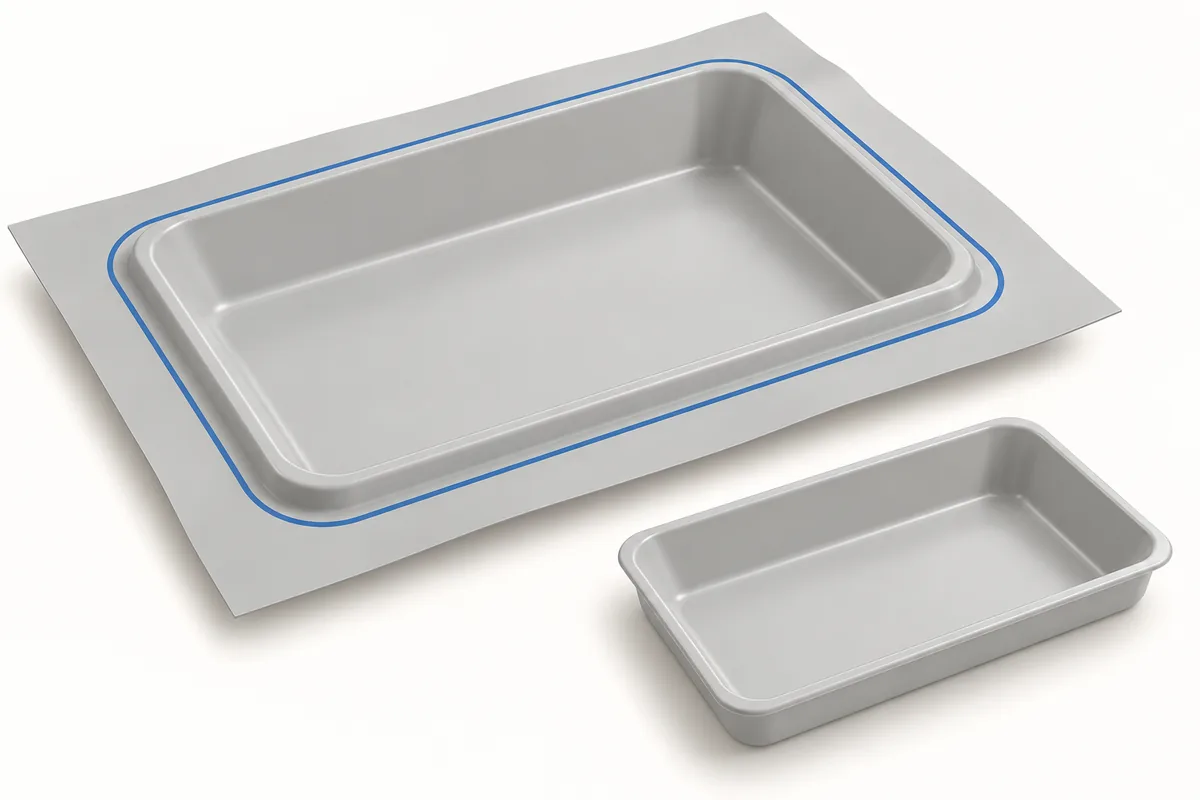
Illustration of formed sheet and a trimmed component. Blue shows a proposed trim boundary; no Premier part, tool or trimming method is demonstrated.
Set acceptance at the part level
Identify the dimensions and reference features to inspect, the appearance requirements and any functional tests. Provide the method, conditions and acceptance criteria where a specification calls for testing. A formed sample and a fully accepted component are different milestones.
Discuss the forming requirement
Bring the drawing status, tooling status and required finished supply scope. Include any existing tool in the tooling brief, and use the component RFQ checklist for the wider programme.