Ultrasonic welding for plastic assemblies
Ultrasonic plastic welding uses mechanical vibration to create heat at the joint between thermoplastic parts. The interface then cools and solidifies under pressure. Premier lists ultrasonic welding within its integrated manufacturing operations.
Define the assembly and joint function
Identify the components being joined and what the completed assembly must do. Confirm the moulding, joining, fitted-item and inspection responsibilities within the programme. The actual material, geometry and acceptance requirements need review before a joining route is agreed.
Show tool contact and part support
- Controlled drawings or models for both parts, their revisions and complete material specifications.
- The proposed joint location and any joint detail that is still open for design review.
- Surfaces available for tool contact and support, including appearance-critical regions.
- Internal features, fitted items or assembly stages that may affect access and handling.
- The required finished position, functional requirements, demand and programme timing.
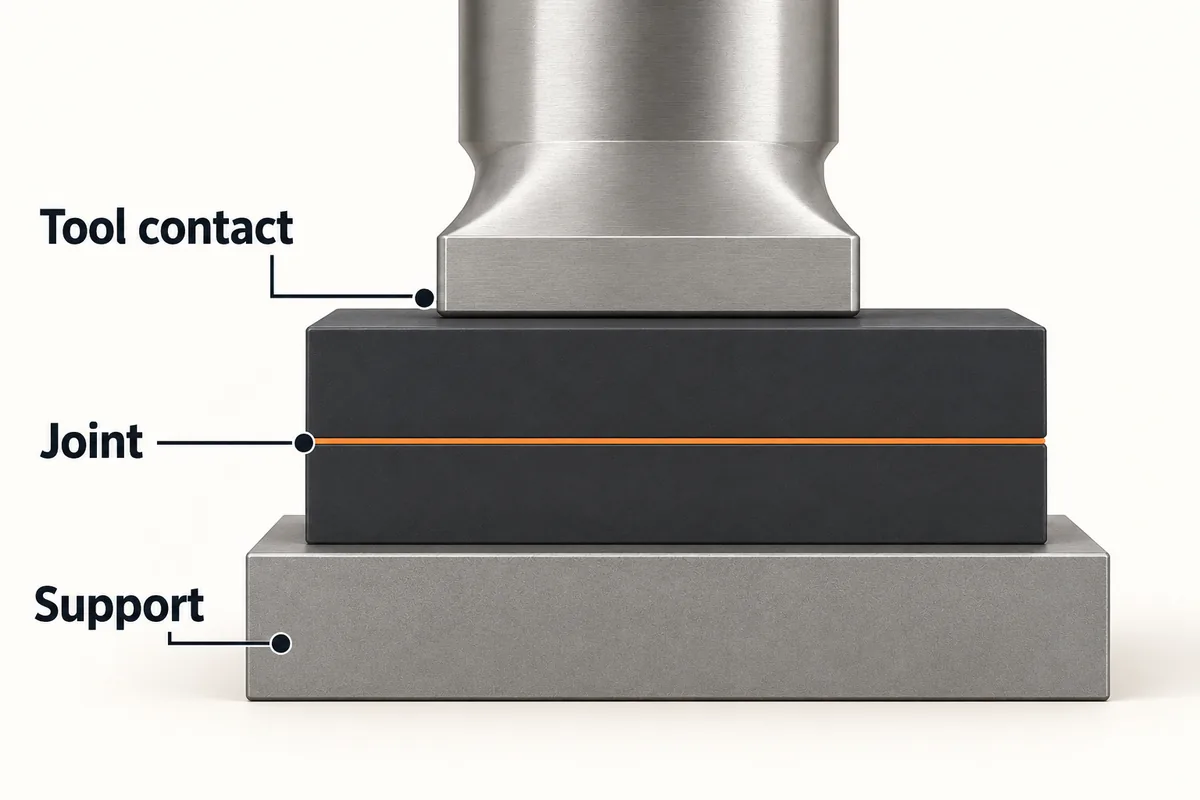
Illustration of contact and support. Orange highlights the interface, not an added material. Not Premier equipment, a specified joint design or a validated weld.
Bring representative parts and history
Identify the material and drawing revision represented by each sample. Explain any existing fit, marking or joint concern and provide the available observations. A sample from another material or revision should be labelled as such.
Agree what a trial must establish and who will review it. Tooling and process conditions are part-specific decisions; do not treat a generic joint sketch or a photograph of a welder as an approved production definition.
Set separate acceptance checks
State the appearance, alignment and functional requirements individually. Define any strength or leakage test by its method, conditions, sample state and acceptance limit. A clean-looking joint alone does not establish its mechanical or sealing performance.
Keep accepted parts, drawing revisions and inspection records linked. Record which material, geometry or fitted-item changes require another technical review.
Discuss the assembly requirement
Start with the application, mating-part data, material specification and supply boundary. Ask the team which operations can be included and how to share confidential drawings through the agreed channel.