Hot-plate welding for plastic assemblies
Hot-plate welding heats the mating surfaces of thermoplastic parts. The heated plate is withdrawn before the parts are pressed together and the joint cools. Premier lists hot-plate welding within its integrated manufacturing operations.
Define the joined assembly
Identify what enters and leaves the joining stage: the two moulded parts, any fitted items and the completed assembly. Agree which moulding, joining, inspection and supply responsibilities belong to the component programme.
Show the mating faces and access
- Controlled drawings or models for both parts, their revisions and specified material grades.
- The joint location, mating faces, finished alignment and dimensions that must be maintained.
- The surfaces and features that need clearance for heating, support and joining.
- Regions where displaced material or a visible seam could affect fit, flow or appearance.
- Intended function, service conditions, expected demand, tooling status and programme timing.
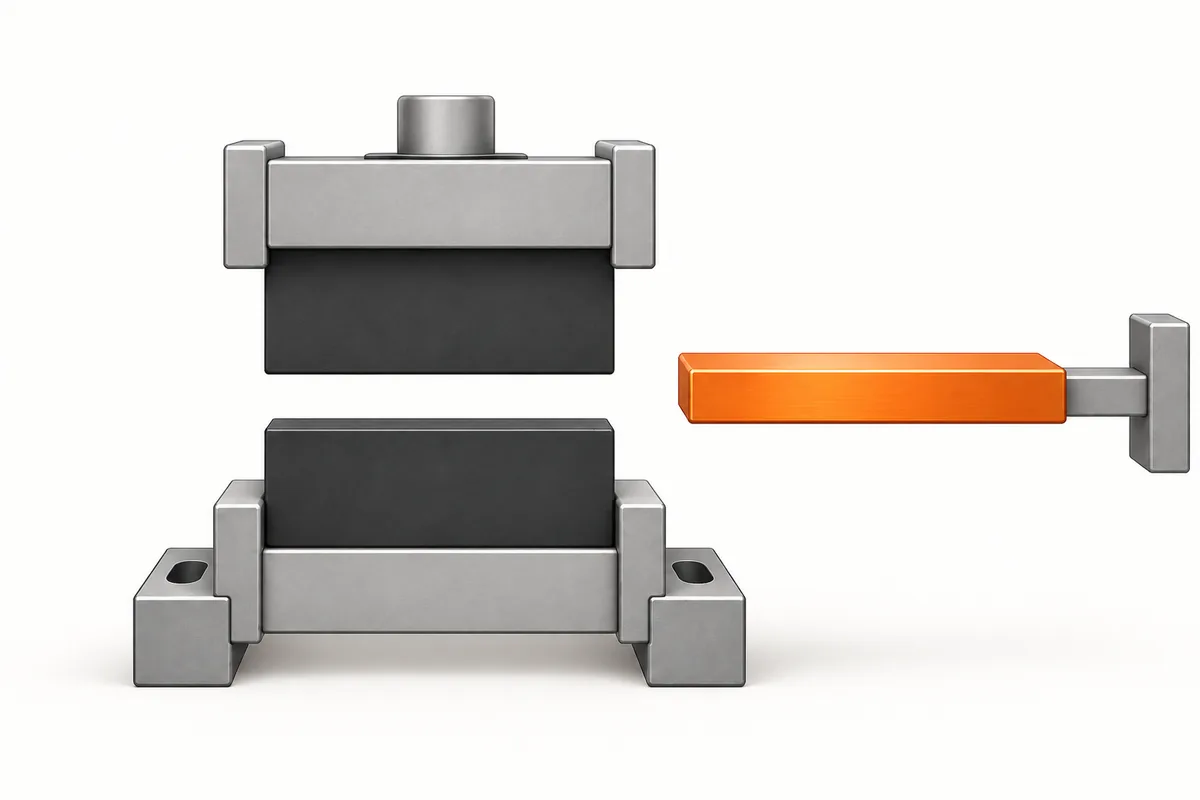
Illustration of a static hot-plate concept. The plate is outside the joining path. Not a complete process sequence, Premier machine, specified material or validated joint.
Agree what the trial must establish
State the open decision: joint feasibility, fit after joining, appearance or a specified functional result. Identify which samples represent the intended part and material. Record differences where prototypes or early samples do not match the controlled production definition.
Agree which conditions the trial needs to represent and who reviews the result. Process settings and tooling details belong to the part-specific technical review; a general process description does not establish them.
Separate the finished-assembly checks
Define the required alignment, dimensions and visible-joint condition. If strength or leakage is a requirement, provide the test method, conditions, sample state and acceptance limit. A satisfactory-looking seam does not establish those results.
Keep the accepted sample, drawing revision and inspection plan aligned. Identify changes that require another review and any handling restrictions for the joined region.
Discuss the joining requirement
Send the application, mating-part information, material specification and required supply scope. Ask the team to confirm the appropriate review and an agreed channel for confidential drawings.