

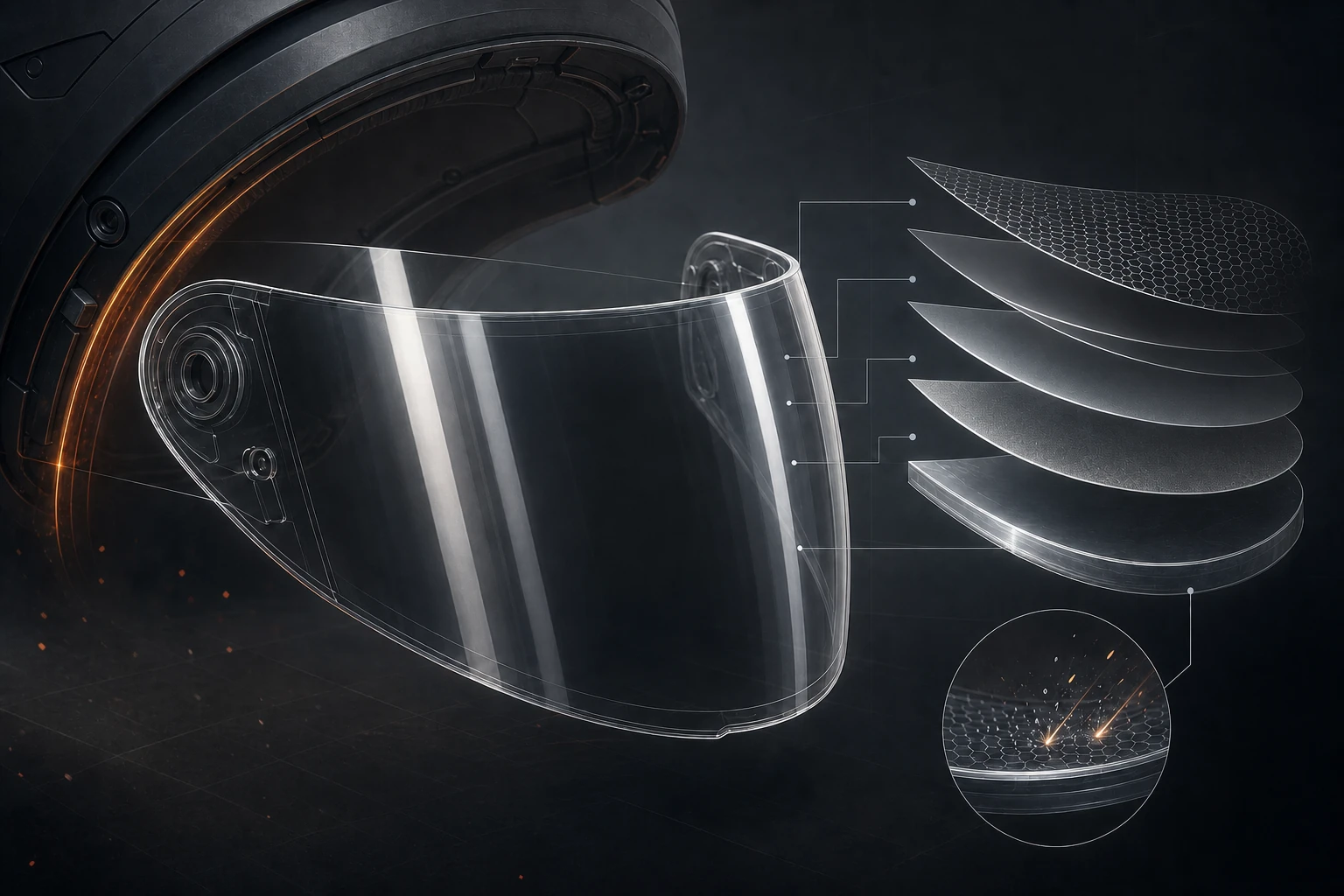
At Premier Plasmotec Private Limited, our Indian engineering, tooling, manufacturing and quality teams work together on plastic components. First establish what visor means: a vehicle-mounted windscreen or a helmet face shield. Premier’s published component examples are motorcycle windscreens and fly screens. The scope and applicable requirements must follow the actual product.
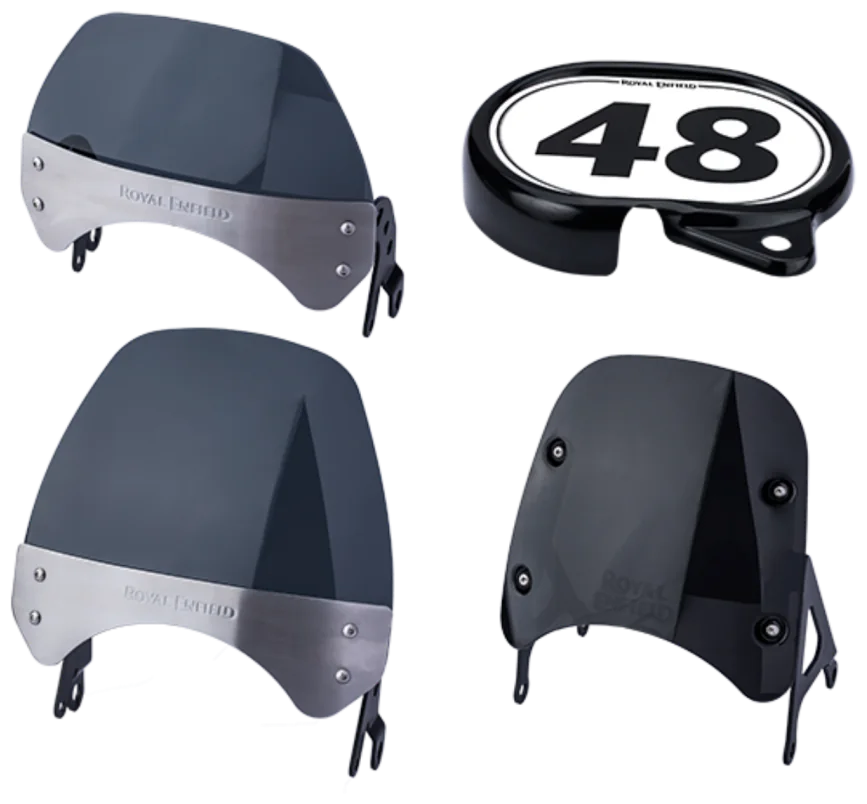
The essentials
- Define the optical zone and allowable distortion.
- Treat coating, trimming, drilling and handling as one surface-quality chain.
- Validate the screen with the exact vehicle mounting interfaces.
- Use the correct compliance language for each destination market.
Optical design and vehicle interfaces
Specify substrate by exact grade, colour and approved optical requirements. Curvature and thickness variation influence transmitted image distortion.
Use filling and gate analysis to assess weld lines and stress in the principal viewing zone. Tool surface condition affects reproduced waviness and marks; resin cleanliness and process handling must also control contamination.
Trimming and drilling must control cracks, burrs and mounting-hole position. Attachment geometry should be checked in the installed condition, including the specified mounting and service operations.
What to compare
| Area | Evidence to request |
|---|---|
| Optics | Optical zone, distortion, haze and transmission method |
| Surface | Coating route, abrasion and handling controls |
| Interface | Vehicle model, mounting geometry and installed-condition checks |
| Compliance | Country, regulation revision and required reports |
| Packing | Protective film, separation and traceability |
Coating, protection and traceability
Hard coating should be defined by an agreed process and test specification. Cleaning, masking, cure and dust control are part of coating consistency.
Abrasion, adhesion, haze and transmission claims require named methods and results. Parts need protected handling between moulding, coating, inspection and packing.
Tint and markings must match the destination-market requirements. Packaging should prevent face-to-face rubbing and pressure marks.
Trace each lot through substrate, moulding, coating and inspection records.
Market requirements
A vehicle-mounted motorcycle windscreen needs a glazing review for its intended market. For the US, NHTSA’s motorcycle-windshield interpretation refers to FMVSS No.205. Establish the applicable glazing classification, test evidence, marks and manufacturer-certification responsibility for the exact product. Do not describe this as government approval.
Questions before choosing a supplier
- Which optical zone, tint and transmission category apply to this exact visor?
- How will the screen be checked against the nominated vehicle mounts, clearances and installed-condition requirements?
- Which coating, abrasion, adhesion and optical methods define finished-part acceptance?
- Which market rules, regulation series, reports and markings apply, and who owns approval?
- How will substrate/coating lots and protected packing remain traceable after design or process changes?
What to include in your request for quotation (RFQ)
- Controlled visor CAD/drawing, revision, substrate grade, curvature, thickness and permitted defects.
- Exact vehicle model, mounting interfaces, clearances and installation checks.
- Optical zones, tint, haze/transmission/distortion methods and acceptance limits.
- Coating, abrasion, adhesion, cleaning and environmental test requirements.
- Destination markets, regulation series, required reports, markings and approval responsibilities.
- Annual/peak demand, tooling status, ownership and production milestones.
- Substrate/moulding/coating/inspection lot traceability and approved process-change controls.
- Protective film, handling surfaces, part separation and transit-packaging requirements.
If a requirement is still undecided, say so in the enquiry.
Glazing references
Use the evidence in your supplier review
For a quotation, keep the drawing revision, material, test requirement and supply responsibility aligned across every offer. Where a requirement is still being developed, identify the open decision and its owner rather than comparing one supplier’s assumption with another supplier’s confirmed scope.
Related manufacturing and buyer resources
Start an engineering discussion
Describe the application, drawing status, expected demand and programme timing through our manufacturing enquiry page. Ask the team how to share confidential drawings or samples through an agreed channel.
Glazing references for the engineering review
NHTSA motorcycle-windshield interpretation; 49 CFR 571.205 glazing standard. Confirm applicability and certification responsibility for the exact product.