

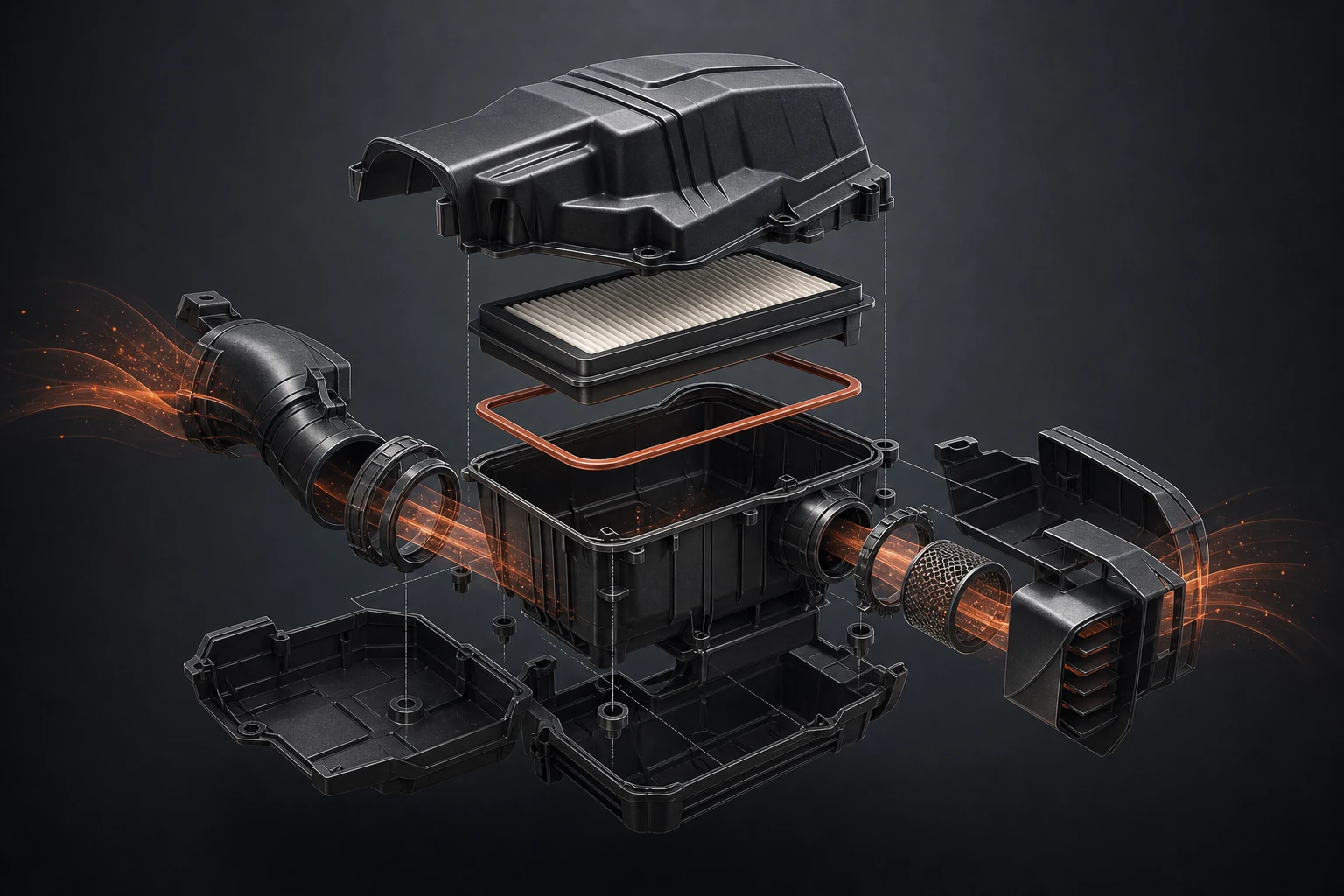
At Premier Plasmotec Private Limited, our Indian engineering, tooling, manufacturing and quality teams work together on plastic components. Specify the housing, filter, sealing and assembly responsibilities together. Component evidence, filter-media evidence and complete-system evidence answer different questions.
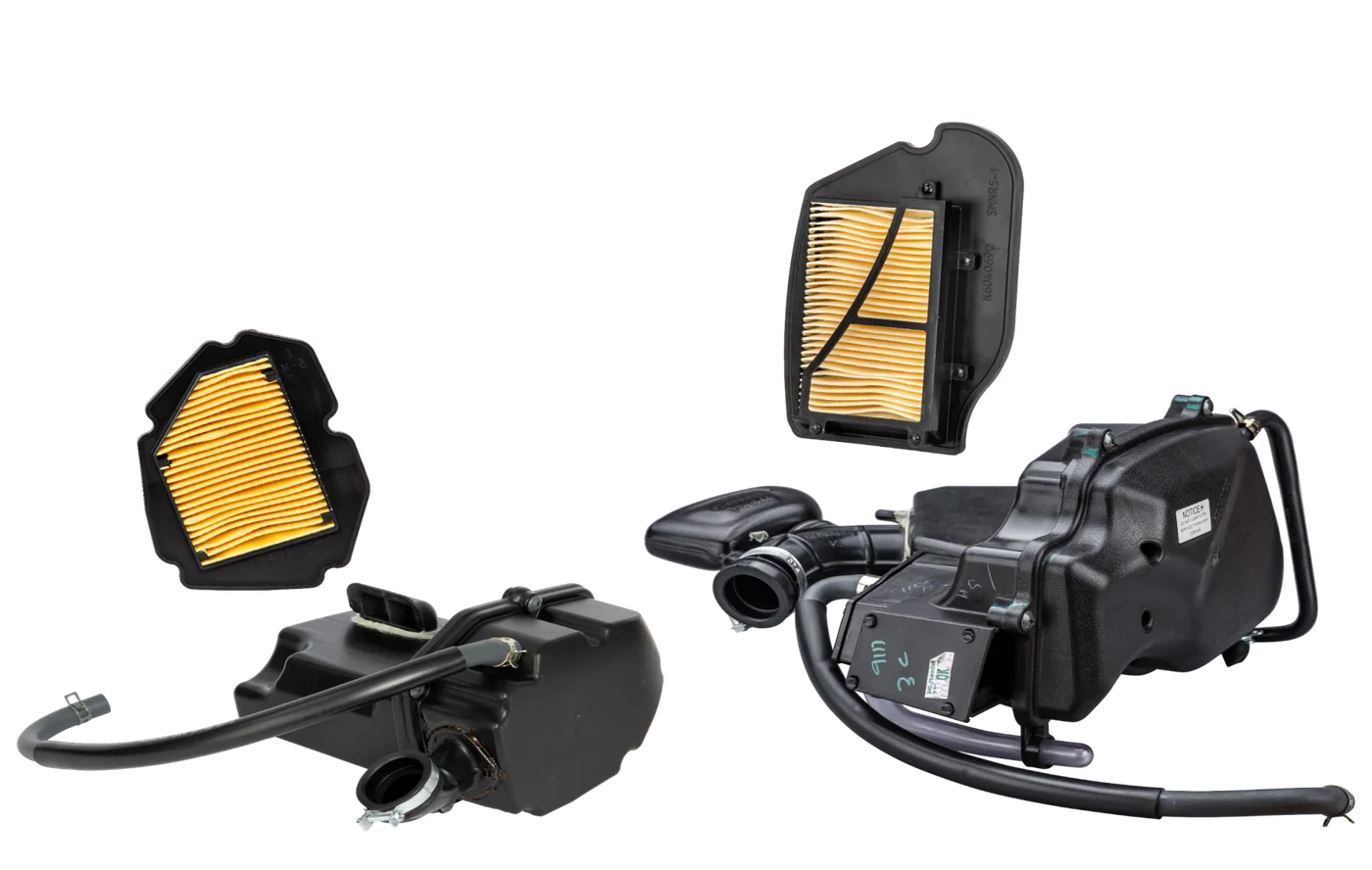
The essentials
- Control every interface along the clean and dirty air paths.
- Define airflow and pressure-drop requirements at stated duty points.
- Design for assembly and filter service without damaging seals.
- Validate leak integrity, fit and durability on the agreed system.
Package, air path and seal interfaces
Define the package envelope, mounting points and neighbouring components. Identify the dirty side before the filter element and the clean side after it, then mark their interfaces in the drawing and control plan.
The filter seat must maintain compression without damaging the element. Housing stiffness and flatness influence seal performance.
Duct bellows, joints and clamps must accommodate the specified movement and installation. Resonator volume and neck geometry are acoustic design inputs; agree how changes to them will be validated.
What to compare
| Area | Evidence to request |
|---|---|
| System package | Envelope, mounts, service and neighbouring parts |
| Air path | Flow targets, ducts, resonators and restrictions |
| Sealing | Filter seat, joints, clamps and bypass control |
| Assembly | Sequence, fixtures and mistake-proofing |
| Validation | Pressure drop, leak, fit and durability methods |
Joining, assembly and validation
Material selection should consider under-bonnet temperature, fluids and vibration. Welds and joined housings need a defined process window and inspection method.
Use mistake-proofing features to reduce reversed elements or missed components. Fixtures should locate critical interfaces and protect sealing faces during assembly.
For leak testing, agree the medium, pressure, fixture, stabilisation time, duration and limit. Compare pressure loss at the same airflow, element configuration and test condition.
Traceability should connect moulded parts, bought-out items, assembly and test results.
Questions before choosing a supplier
- Where can air bypass the filter through the seat, joints or service features?
- Which airflow and pressure-loss duty points apply to the complete assembly?
- What movement, acoustic and under-bonnet conditions must the ducts and resonators withstand?
- Which joining, fixture and mistake-proofing operations are included in the supply scope?
- What calibrated test configuration, leak limit and durability plan will support approval?
What to include in your request for quotation (RFQ)
- Controlled assembly CAD/drawings, mounts, envelope, neighbouring parts and service access.
- Filter-element definition, seal compression, clean/dirty-side interfaces and installation orientation.
- Airflow duty points, permitted restriction/pressure loss and the element condition used for comparison.
- Temperature, fluid, vibration, movement and acoustic requirements.
- Duct joints, clamps, bought-out parts and welding/assembly responsibility.
- Leak medium, pressure, fixture, stabilisation/duration and limits; separate durability and fit criteria.
- Demand, assembly sequence, traceability, variant control and production sampling.
- Tooling ownership, inspection reports, service samples and protective packaging.
If a requirement is still undecided, say so in the enquiry.
Specifications and references
- Use the customer’s drawing, material specification and agreed test standards to define the approval requirements.
ISO 5011 concerns performance testing of inlet-air cleaning equipment for internal-combustion engines and compressors. Define the assembly, airflow, test conditions and acceptance criteria for the proposed system.
Use the evidence in your supplier review
For a quotation, keep the drawing revision, material, test requirement and supply responsibility aligned across every offer. Where a requirement is still being developed, identify the open decision and its owner rather than comparing one supplier’s assumption with another supplier’s confirmed scope.
Related manufacturing and buyer resources
Start an engineering discussion
Describe the application, drawing status, expected demand and programme timing through our manufacturing enquiry page. Ask the team how to share confidential drawings or samples through an agreed channel.