

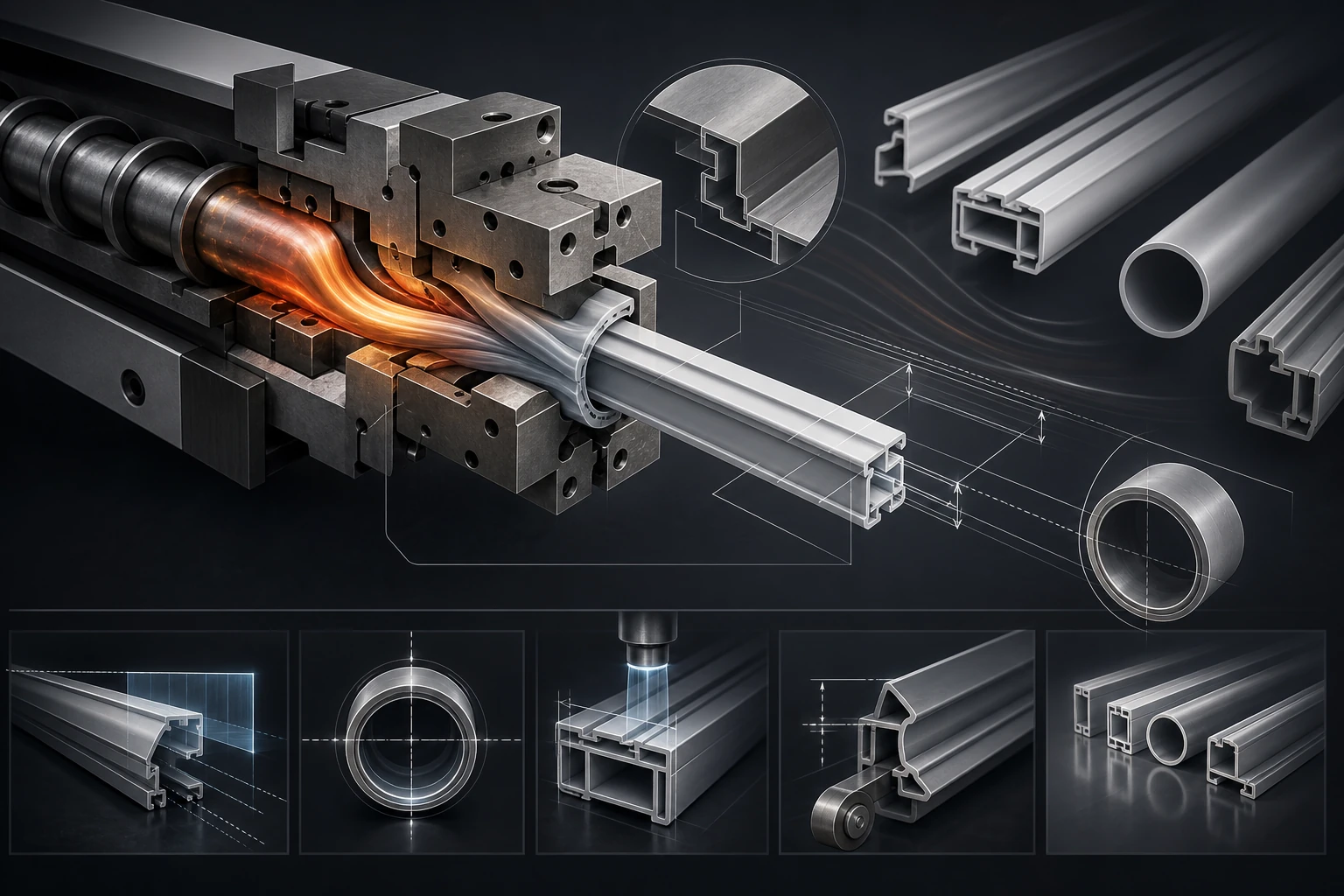
At Premier Plasmotec Private Limited, our Indian engineering, tooling, manufacturing and quality teams work together on plastic components. A continuous tube or profile and a discrete moulded PVC part need different process discussions. Start with the finished geometry, compound and supplied form before comparing quotations.
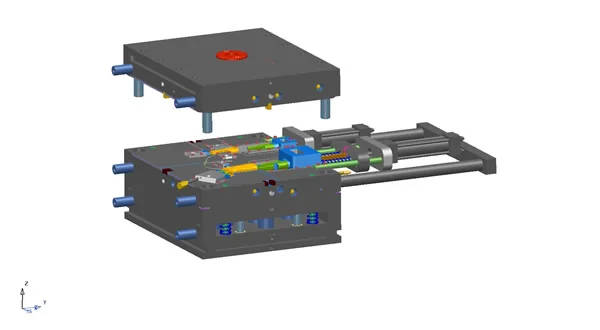
The essentials
- Identify extrusion or moulding explicitly.
- Specify the compound or required properties, not simply “PVC”.
- Control the profile after it leaves the die; cooling and haul-off matter.
- Agree how dimensions, cut length, appearance and packaging will be checked.
Compound, die and line control
Rigid and flexible PVC use different compound and processing specifications. State the approved grade, colour and finish; where hardness is required, name the scale, test method and conditioning requirements.
For extrusion, the die shapes a continuous section rather than an individual cavity-moulded part. Die swell and material draw-down must be considered when finalising tooling.
Extruder output, calibration, cooling and haul-off speed must be set together. Changes can alter wall thickness and final section dimensions. Agree where samples are taken and how they are conditioned before measurement.
What to compare
| Area | Evidence to request |
|---|---|
| Geometry | Section drawing, tolerances and mating features |
| Material | Approved compound or functional specification |
| Line control | Die, calibration, cooling and haul-off plan |
| Inspection | Section, cut-length and appearance checks |
| Supply | Coil or cut format, packaging and annual demand |
Finished-section inspection and supply
For cut profiles, specify length, end condition and straightness. For coiled products, specify coil dimensions and permissible set after uncoiling. Hollow sections also need checks for wall distribution and collapse.
Mating profiles should be assessed with the actual adjoining component or gauge. Inspection should reference stable datums and a conditioned sample where appropriate.
Surface streaks, burn, contamination and colour drift need agreed visual limits. Material storage and regrind rules should be documented for the selected compound.
Packaging must prevent bending, crushing, marking and heat distortion in transit. Tool maintenance should include die cleaning and dimensional verification.
Sampling frequency should reflect start-up, changeover and steady production risks.
Questions before choosing a supplier
- Which die and calibration assumptions control the quoted section tolerances?
- How will wall thickness and mating fit be checked at start-up and during steady production?
- What sample temperature and conditioning time will be used for dimensional approval?
- How are compound lots, line settings and cut or coil batches linked to inspection records?
- Which compound, colour, regrind or die changes require customer approval?
What to include in your request for quotation (RFQ)
- Controlled section drawing, revision, units, tolerances and mating-part or gauge data.
- Application and service conditions; identify rigid or flexible PVC and the approved compound or properties still to be selected.
- Colour, finish, hardness scale and named material test requirements where applicable.
- Cut length or coil format, end condition and straightness or permissible coil set.
- Annual and peak demand, delivery schedule and programme timing.
- Existing die/calibration status, line interfaces, ownership and maintenance responsibilities.
- Start-up and production sampling, conditioning, visual limits and approved regrind rules.
- Packaging, stacking or coiling protection, part identification and traceability.
If a requirement is still undecided, say so in the enquiry.
Specifications and references
- Use the customer’s drawing, material specification and agreed test standards to define the approval requirements.
Use the evidence in your supplier review
For a quotation, keep the drawing revision, material, test requirement and supply responsibility aligned across every offer. Where a requirement is still being developed, identify the open decision and its owner rather than comparing one supplier’s assumption with another supplier’s confirmed scope.
Related manufacturing and buyer resources
Start an engineering discussion
Describe the application, drawing status, expected demand and programme timing through our manufacturing enquiry page. Ask the team how to share confidential drawings or samples through an agreed channel.