
A fit-specific floor mat is a vehicle-interface product. Coverage, pedal clearance, seat-track movement, retention, edge height, material behaviour and packaging all affect whether the mat fits safely and consistently.
For OEM procurement, product engineering and supplier-quality teams, the strongest sourcing decision comes from linking the part requirement to a practical manufacturing and validation plan. This guide explains what to specify, what to verify and what to include in the RFQ.
The essentials
- Use the exact vehicle variant and floor geometry.
- Treat pedal and control clearance as non-negotiable.
- Validate retention and movement, not appearance alone.
- Specify material claims through test evidence.
Why fit-specific mats are an engineering product
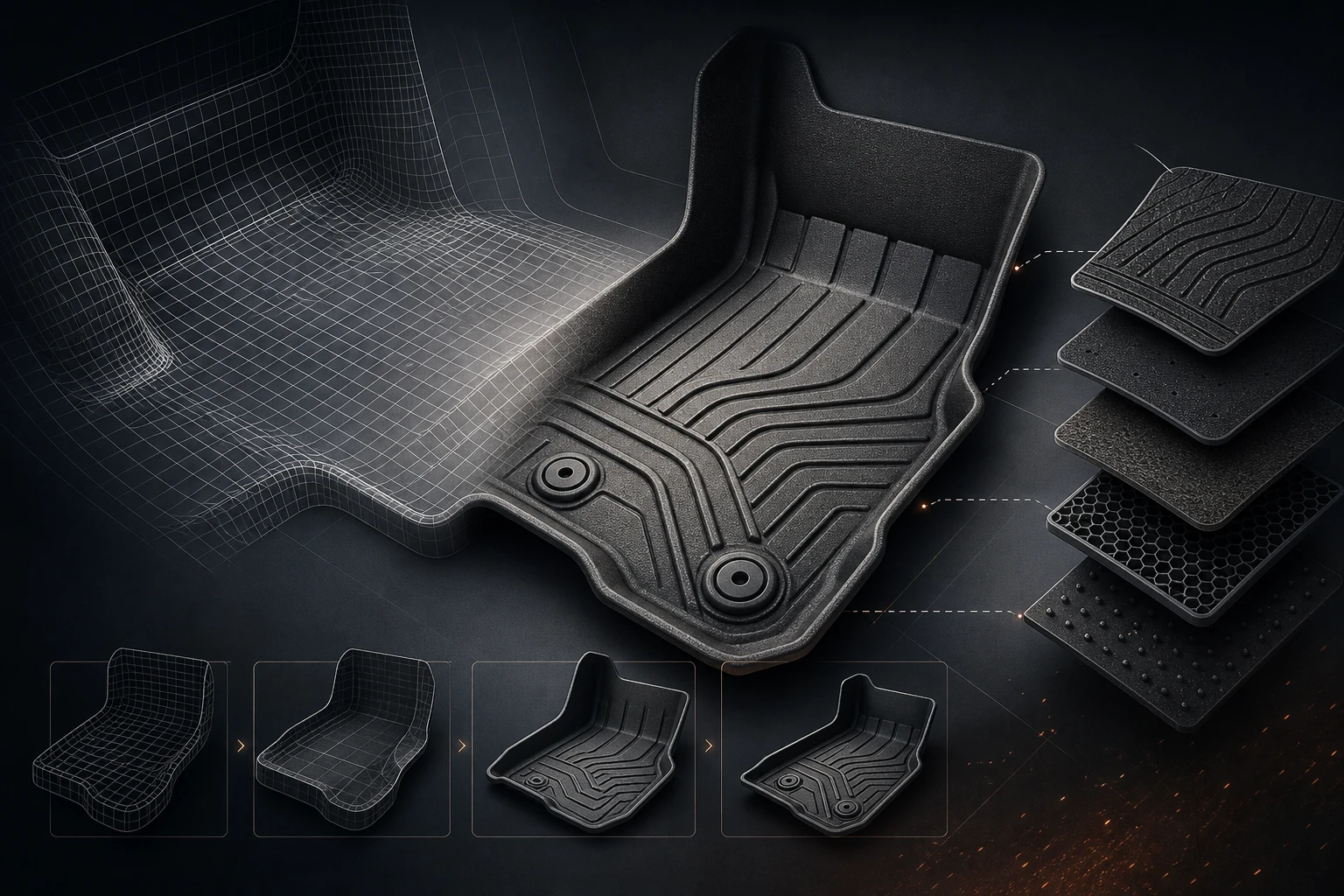
Capture the production vehicle floor or controlled CAD for the exact variant. Define coverage around the tunnel, sill, seat mounts and console.
Pedal clearance and retention-point fit
Keep the mat clear of accelerator, brake, clutch and foot-operated controls. Retention points must match location, geometry and installation force.
Raised-edge containment and lay-flat behaviour
Raised edges should contain debris without interfering with trim or movement. Material thickness and stiffness affect lay-flat behaviour and edge shape.
What to compare
| Area | Evidence to request |
|---|---|
| Vehicle data | Model, variant, floor scan or CAD |
| Fit | Coverage, clearances, seat travel and trim interfaces |
| Retention | Fixing points and movement checks |
| Material | Grade, thickness, finish and required tests |
| Packing | Part identification, nesting and shape protection |
Surface texture and underside grip
Surface texture should balance cleanability, appearance and foot grip. Underside geometry should limit movement without damaging the carpet.
Tool split, draft and full-range fit trials
Tool split and draft influence visible edges and dimensional repeatability. Fit trials should include seats at travel extremes and all relevant controls.
Temperature conditioning and named material tests
Temperature conditioning can reveal curl, shrinkage or loss of shape. Odour, VOC, flammability or chemical claims need named methods and results.
Colour, grain and variant identification
Colour and grain should be controlled with approved masters. Variant identification must prevent the wrong mat entering the pack.
Questions worth asking before nomination
- Which input assumptions could change the tool, process route or quoted price?
- Which characteristics are controlled by process settings, and which require inspection of every part or lot?
- What will be measured during trials, and who approves the result?
- How are material, cavity, machine, assembly and inspection records connected?
- What happens when a drawing, material or demand profile changes after nomination?
Packaging should preserve the three-dimensional shape without permanent creases. The RFQ should include vehicle, variant, coverage intent, retention and forecast. These questions turn a capability discussion into a clear technical and commercial responsibility map.
How Premier supports this work
Premier’s component portfolio includes floor-mat, scooter-mat, universal-moulded-mat and three-dimensional-mat examples. Vehicle-specific fit, material and performance requirements should be confirmed for each enquiry.
Premier’s engineering, tooling, manufacturing and quality teams can review the requirement against the drawing, material, production volume and agreed validation plan. The useful starting point is the component data, not a generic capability question.
What to include in the RFQ
- Controlled 3D CAD and the latest drawing revision.
- Component function, mating interfaces and critical characteristics.
- Exact material grade, or the service conditions if material selection is open.
- Annual volume, peak demand, programme timing and target production location.
- Existing tooling status, target machine interfaces and ownership requirements.
- Appearance zones, packaging expectations and traceability requirements.
- Applicable customer specifications, standards and validation methods.
- Samples, mating parts and previous failure information where available.
A complete input pack shortens feasibility review and makes quotations easier to compare. If a value is not yet fixed, identify it as an open engineering decision and provide the condition it must satisfy.
Start a technical review
Send the drawing, material requirement, expected volume and validation plan through Premier’s manufacturing enquiry page. The relevant engineering, tooling, manufacturing and quality teams can then review the part and respond against the actual scope.
Related capabilities
Technical references
- Customer drawing, material specification and applicable validation standards should remain the controlling technical references.