

Cabin air filters for vehicle HVAC systems
Premier Plasmotec Private Limited’s published filtration portfolio includes PM2.5 cabin-filter and activated-carbon cabin-filter examples. We manufacture plastic components and assemblies in India through connected engineering, tooling, production and quality teams. For a cabin-filter programme, we agree the product construction, vehicle interface and required performance evidence before quoting a finished part.
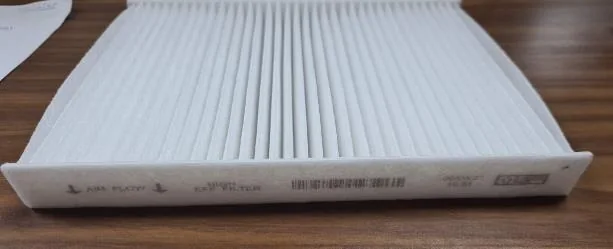
Keep cabin filtration separate from engine filtration
A cabin filter serves the vehicle’s cabin-air system. An engine air-cleaner element has a different installation and function. State the actual application and provide the HVAC interface drawing so the enquiry is routed correctly. A common filter shape or media description does not make the two products interchangeable.
This page keeps particle and activated-carbon variants within one cabin-filter family. The relevant differences should be explained through construction and tested function rather than creating near-identical pages for every marketing phrase.
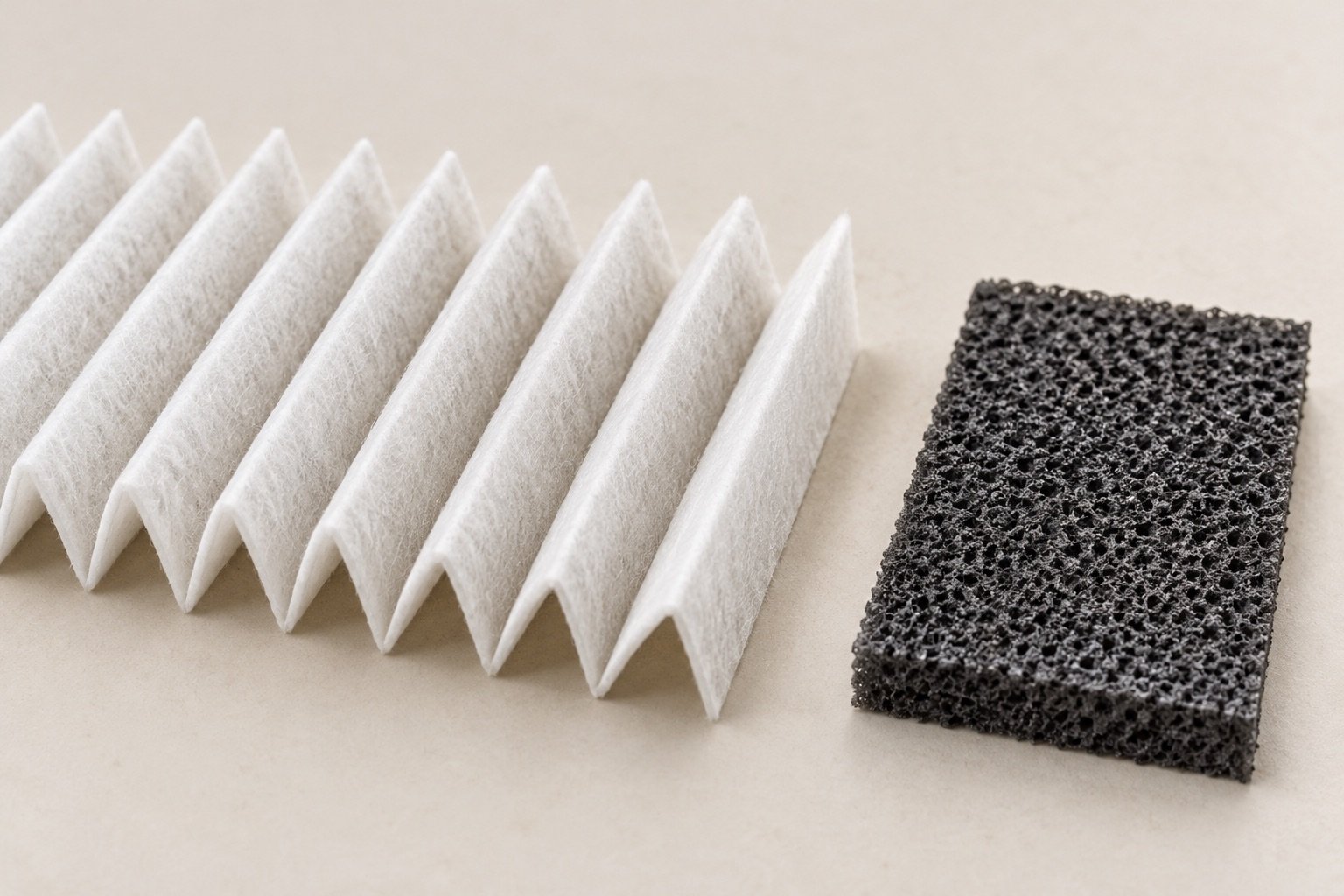
What does the PM2.5 label establish?
The public product name identifies a cabin-filter category. It does not, by itself, state a measured particle-efficiency percentage, test aerosol, airflow or service-life result. For procurement, specify the particle-performance requirement and the method used to assess it.
Ask for results that identify the complete filter construction, sample condition and relevant test settings. Clarify whether a figure comes from raw media or the finished filter. Avoid treating a media supplier’s result as proof that every assembled filter or installation achieves the same performance.
Activated carbon needs a defined gas or odour requirement
If the application requires an activated-carbon construction, describe the target exposure and the customer specification. A carbon-containing filter should not be presented as removing every gas or all odours. The required performance needs an identified method, conditions and acceptance criteria.
Particle and gas-related requirements should be recorded separately where both apply. Establish the consequences of changing the medium, carbon construction or supplier. Agree the validation needed before an alternative is used in production.
Fit, pressure drop and handling belong in the specification
Provide the envelope, seal or frame interfaces, installation direction and retention features. Include the housing geometry where it is needed to assess fit. Identify whether the component is installed at vehicle assembly or supplied through a service channel, because packaging and identification requirements may differ.
Agree the airflow and pressure-drop requirements with the customer’s performance specification. State the test condition and how any dimensional or performance change after conditioning is assessed. Packaging should protect the element from distortion, damage and contamination through the agreed logistics route.
Prepare an evidence-based cabin-filter RFQ
Send the controlled drawing, material or media requirements, variant definition, demand, required test methods, acceptance criteria, packaging and programme timing. Identify customer-specified bought-out materials and the party responsible for design approval.
Premier’s portfolio establishes the named product examples, not a universal laboratory rating. Ask the team for current plant allocation, exact construction and releasable results for the proposed filter. If the specification is still being developed, separate that engineering work from a confirmed serial-supply offer so procurement can compare equivalent scope.
Continue the engineering review
Discuss the part with our team
Start with the application, drawing status, material, demand and programme timing. Ask how to share confidential files.