

Blow Moulding
Blow moulding for hollow parts.
Blow moulding for HDPE fuel tanks and other hollow components, with construction, interfaces and validation requirements defined for the application.
What we can support
A controlled route for hollow functional components.
Material, wall-thickness distribution, tooling and test requirements are reviewed for the part.
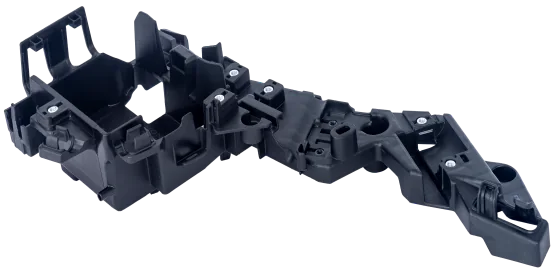
Hollow parts
Blow moulding
HDPE fuel-tank and hollow-component enquiries begin with the drawing, material and construction. Multilayer or barrier requirements need a separate feasibility review.
Read the hollow-component guide
Control
Wall distribution and interfaces
Review wall distribution, mould split, necks, mounting points and mating interfaces together before tooling release.
Review toolingEvidence
Process validation
Agree dimensional, leakage and other applicable functional checks for the actual part, including test conditions and acceptance limits.
Review validationHow the work moves
Hollow components move through a controlled blow-moulding route.
- 01
Application review
Confirm the hollow-part function, overall dimensions, material and test requirements.
Review engineering - 02
Part and tool definition
Review wall-thickness distribution, mould split, interfaces and mould geometry.
Review tooling - 03
Material and process plan
Define material preparation, process settings and handling requirements.
- 04
Blow moulding
Run the approved process window and monitor part geometry, wall condition and interfaces.
Review manufacturing - 05
Completion
Trim, join or finish the hollow component as required.
Review completion - 06
Validation and release
Review dimensional, leak-related or programme-specific functional evidence.
Review validation
Discuss your requirements
Checks before blow moulding.
| Stage | Review focus | Expected output |
|---|---|---|
| Application | Hollow-part function, envelope, material grade, specified construction and service conditions | Defined component brief |
| Part and tool | Wall distribution, mould split and interfaces | Defined moulding route |
| Process | Material preparation and controlled blow-moulding cycle | Trial parts checked against the agreed requirements |
| Validation | Agreed dimensional, leakage and other application-specific methods, conditioning and acceptance limits | Inspection and approval records |
Talk to our team
Tell us about the part.
Send the drawing and 3D model, material, specified construction, demand, interfaces, validation requirements and programme timing. Identify whether the enquiry covers a child part, hollow component or completed assembly.