

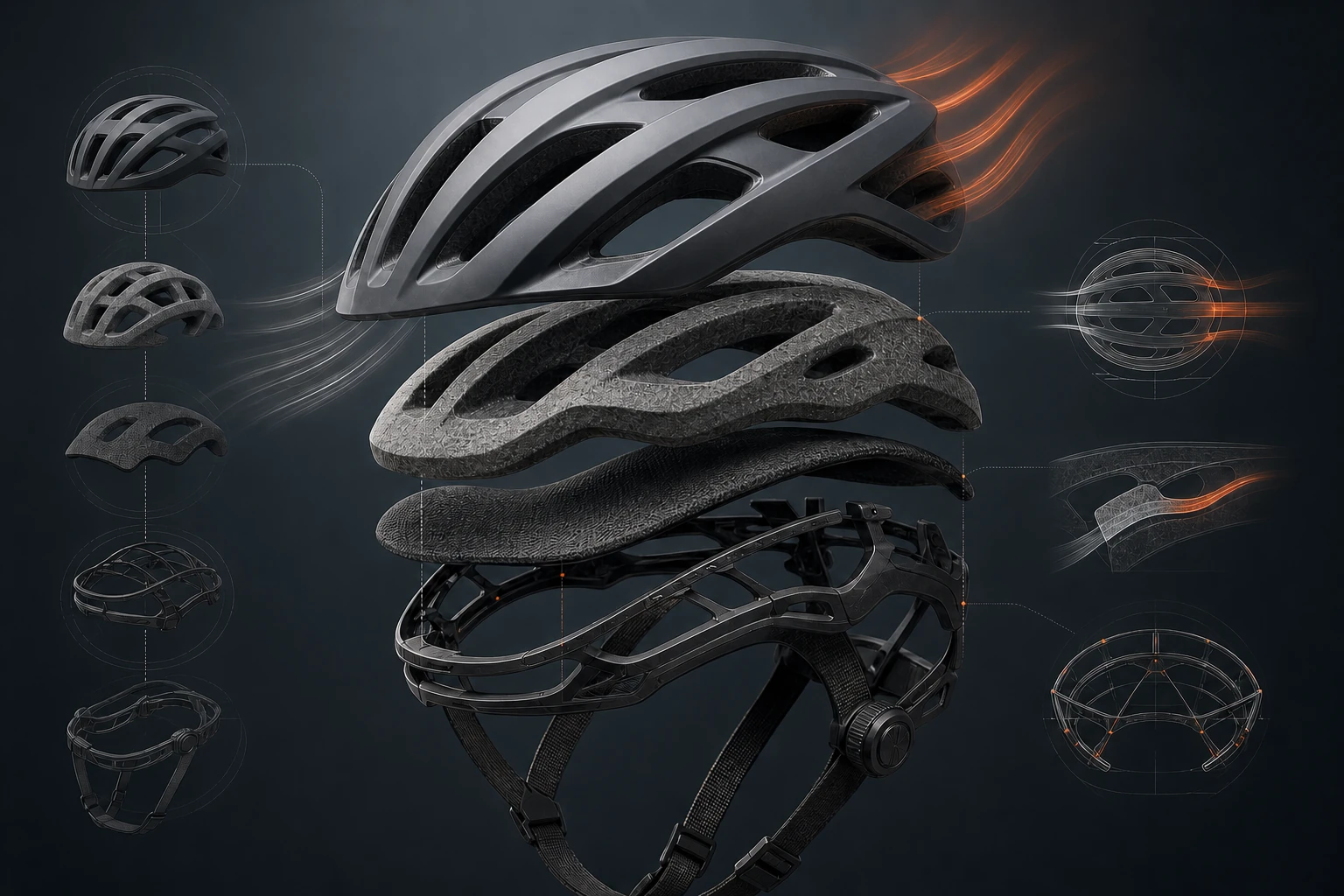
An OEM bicycle helmet programme joins product design, fit architecture, impact-management construction, retention, ventilation, manufacturing consistency and destination-market compliance. Factory capability and product certification are related, but they are not the same thing.
For OEM procurement, product engineering and supplier-quality teams, the strongest sourcing decision comes from linking the part requirement to a practical manufacturing and validation plan. This guide explains what to specify, what to verify and what to include in the RFQ.
The essentials
- Name the market and exact bicycle-helmet standard.
- Control shell, liner, comfort and retention as a system.
- Build the size architecture around approved headforms and fit studies.
- Tie every certification report to the exact model and construction.
What a helmet brand must qualify
Do not apply motorcycle-helmet standards to a bicycle helmet. The target country and sales channel determine the applicable requirements.
Ask the supplier to show how these requirements appear in the drawing review, process plan and inspection record. If the design is still open, agree the trial or analysis that will settle it.
Product architecture, sizes and user fit
Shell, energy-absorbing liner, comfort pads and retention each have distinct functions. Vent geometry affects both airflow and the structure available to manage impact.
Compare proposals on the same input revision. A technically stronger quotation makes assumptions visible and explains what must happen before the part can be approved for serial production.
Materials and manufacturing route
Size ranges need controlled headform, liner and padding definitions. Retention anchors and strap routing should resist incorrect assembly.
Acceptance criteria should identify the specimen condition, method, sampling plan and responsible approver. That prevents a general capability statement from being mistaken for product evidence.
What to compare
| Area | Evidence to request |
|---|---|
| Market | Country, channel and exact standard revision |
| Construction | Shell, liner, pads, retention and ventilation |
| Sizing | Headforms, size architecture and fit approval |
| Testing | Impact, retention, roll-off and required reports |
| Traceability | Model, components, lot, labels and change control |
Retention, ventilation, finish and assembly controls
Buckles, adjusters and comfort parts need controlled suppliers and specifications. Adhesives and decorative processes must be compatible with the helmet materials.
This decision also affects tooling cost, trial time and long-term repeatability. Resolve it before tool release wherever possible; later correction is usually slower and more expensive.
Testing and market-specific compliance evidence
Impact tests depend on headform, conditioning, location and specified method. Retention and roll-off tests evaluate different aspects of helmet security.
Ask the supplier to show how these requirements appear in the drawing review, process plan and inspection record. If the design is still open, agree the trial or analysis that will settle it.
Batch traceability, packaging and change control
A test report should identify model, size, construction, samples and laboratory. Design changes may require engineering review or re-testing.
Compare proposals on the same input revision. A technically stronger quotation makes assumptions visible and explains what must happen before the part can be approved for serial production.
Premier manufacturing scope and evidence
Lot and component traceability support investigation and controlled change. Packaging must protect the shell and retention system during transport.
Acceptance criteria should identify the specimen condition, method, sampling plan and responsible approver. That prevents a general capability statement from being mistaken for product evidence.
Questions worth asking before nomination
- Which input assumptions could change the tool, process route or quoted price?
- Which characteristics are controlled by process settings, and which require inspection of every part or lot?
- What will be measured during trials, and who approves the result?
- How are material, cavity, machine, assembly and inspection records connected?
- What happens when a drawing, material or demand profile changes after nomination?
Private-label artwork must not obscure mandatory labels or markings. The RFQ should include markets, standards, sizes, construction and forecast. These questions turn a capability discussion into a clear technical and commercial responsibility map.
How Premier supports this work
Premier’s approved corporate material records historical manufacturing coverage for children’s and bicycle helmets. A current enquiry should confirm the present product scope, construction, factory route and exact market test requirements before nomination.
Premier’s engineering, tooling, manufacturing and quality teams can review the requirement against the drawing, material, production volume and agreed validation plan. The useful starting point is the component data, not a generic capability question.
What to include in the RFQ
- Controlled 3D CAD and the latest drawing revision.
- Component function, mating interfaces and critical characteristics.
- Exact material grade, or the service conditions if material selection is open.
- Annual volume, peak demand, programme timing and target production location.
- Existing tooling status, target machine interfaces and ownership requirements.
- Appearance zones, packaging expectations and traceability requirements.
- Applicable customer specifications, standards and validation methods.
- Samples, mating parts and previous failure information where available.
A complete input pack shortens feasibility review and makes quotations easier to compare. If a value is not yet fixed, identify it as an open engineering decision and provide the condition it must satisfy.
Start a technical review
Send the drawing, material requirement, expected volume and validation plan through Premier’s manufacturing enquiry page. The relevant engineering, tooling, manufacturing and quality teams can then review the part and respond against the actual scope.
Related capabilities
Technical references
- Customer drawing, material specification and applicable validation standards should remain the controlling technical references.